

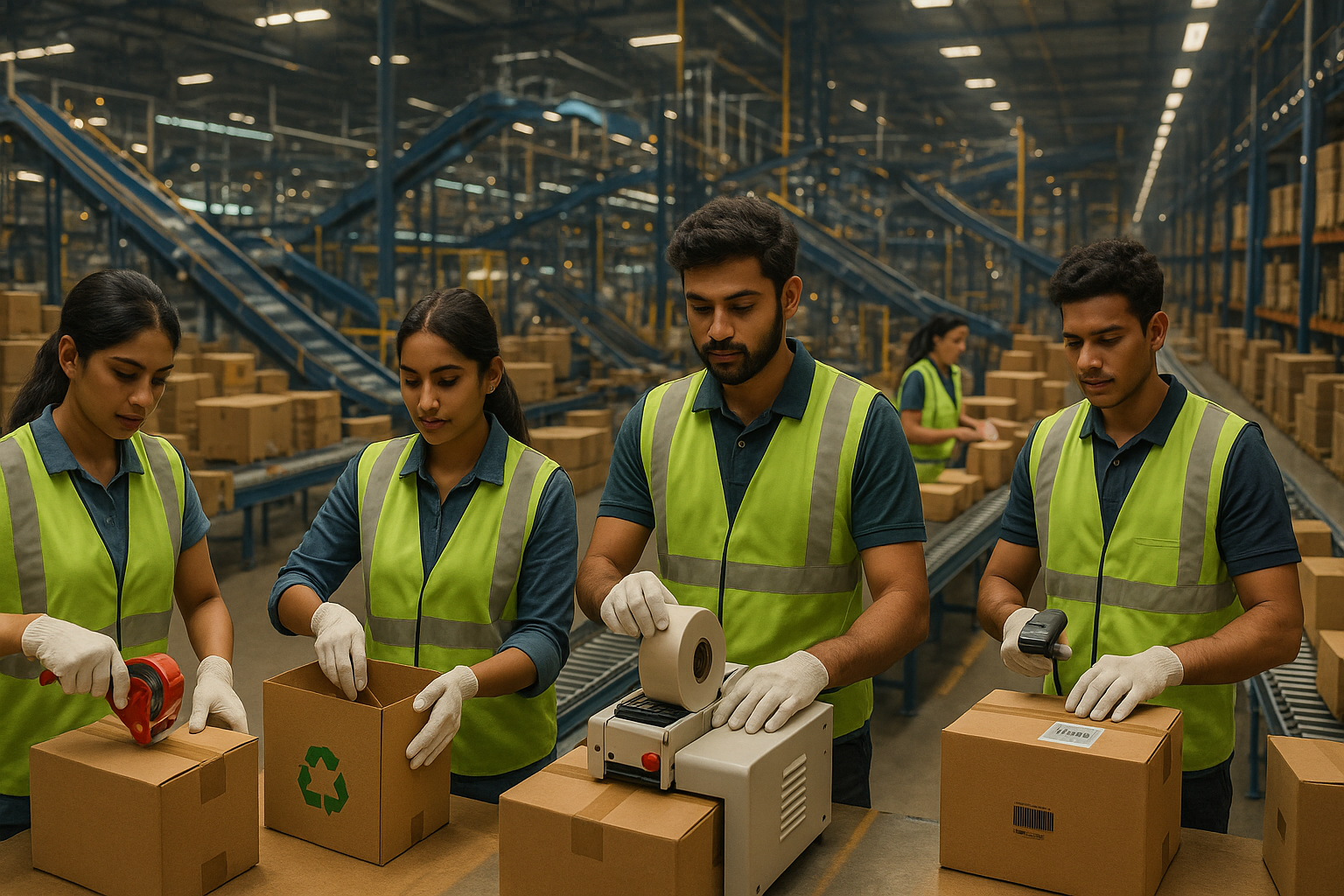
In 2025, packing jobs have become one of the most in-demand employment categories across India. The steady rise of e-commerce, logistics, manufacturing, and retail industries has transformed packaging from a basic operational task into a critical component of business success. Every product, whether it is an electronic gadget, a food item, or a piece of clothing, goes through a packaging process before reaching the customer. As companies expand their production and distribution networks, the need for skilled, efficient, and reliable packing staff continues to grow across cities, towns, and industrial areas.
Packaging work is no longer seen as a low-level or temporary job. It is now a structured profession that offers regular income, steady work, and opportunities for advancement into supervisory or logistics roles. Many large companies, including those in food processing, pharmaceuticals, consumer goods, and electronics, hire dedicated teams of packers, loaders, and quality inspectors to handle large-scale operations. Even small manufacturing units and local courier companies depend heavily on packing staff to maintain efficiency and customer satisfaction.
The scope of packing jobs in India has widened significantly due to the growth of online shopping and same-day delivery models. Major e-commerce platforms and third-party logistics firms operate large fulfillment centers across the country, where thousands of people are employed in packing and sorting activities. In these warehouses, each product must be carefully checked, wrapped, labeled, and dispatched in perfect condition. The rise of regional warehouses and micro-hubs in tier 2 and tier 3 cities has made packing jobs accessible to a larger workforce, including those who prefer working closer to home.
A typical packing job involves multiple stages of work. It begins with receiving the product from the storage section, inspecting it for quality, and then wrapping or boxing it according to company standards. Proper labeling and tagging are important to ensure the right product reaches the correct destination. In many industries, packers also handle sealing machines, barcode scanners, and light packaging equipment. Depending on the company, employees may work individually or in teams, following specific production schedules and safety rules. Attention to detail, patience, and the ability to work in a fast-paced environment are essential skills for success in this field.
Modern packaging also emphasizes sustainability. Many companies have switched to eco-friendly materials like paper-based boxes, recyclable plastics, and biodegradable wraps. This shift has created a new demand for workers who understand the handling of different packaging materials and the environmental standards related to them. Those with experience in sustainable or automated packaging methods often find better career prospects in the long term.
The demand for packing staff is consistent throughout the year but peaks during festive seasons or large online sales events when companies handle massive order volumes. Many employers offer long-term contracts after initially hiring candidates on a temporary basis during these busy periods. Once employees prove their reliability and efficiency, they often receive permanent roles or internal promotions. This structure makes packing jobs a great option for those seeking stability without the requirement of advanced education or technical qualifications.
Working conditions in packing jobs vary depending on the industry and company scale. Large logistics centers and factories generally have well-organized workspaces with safety measures, ventilation, and rest facilities. Smaller setups might have more manual work and longer hours. Most packing jobs require candidates to stand for extended periods and handle repetitive tasks, which demands physical stamina and alertness. However, companies are increasingly adopting ergonomic practices and automated systems to reduce fatigue and improve productivity.
Training for packing roles is usually provided on the job. New employees learn the correct ways to handle goods, use packaging tools, and follow safety instructions. Some firms also provide short skill development courses through government or private training centers. These programs cover basic topics like inventory management, material handling, and machine operation, making candidates more confident and efficient in their roles. Over time, experienced packers can move into positions such as team leader, supervisor, or inventory coordinator.
In addition to warehouse and factory packing jobs, there are growing opportunities in export packaging and cold chain logistics. Export-oriented companies require specialized packing methods to protect goods during long-distance transportation. Workers in these setups are trained to use moisture-resistant materials, temperature-controlled packaging, and international labeling standards. Similarly, cold storage and food logistics companies employ skilled packers who can handle perishable items under controlled conditions. These roles demand more precision but also offer better exposure to professional packaging systems.
Women are also entering the packing workforce in large numbers. Many manufacturing and e-commerce companies have started hiring women for packaging roles because of their attention to detail and accuracy in handling products. To encourage female participation, several organizations provide safe transportation, flexible shifts, and workplace safety measures. This inclusion has helped diversify the industry and increase productivity levels across many units.
Rural and semi-urban areas have also benefited from the rise of packing jobs. As industrial zones expand beyond major cities, smaller towns have become new hubs for warehousing and packaging operations. This decentralization has created local employment opportunities for thousands of youth who previously had to migrate to metros for work. The combination of low educational requirements, quick training, and consistent demand makes packing jobs one of the most accessible employment options for people across all regions.
In terms of career progression, packing jobs can lead to multiple paths. With experience and additional skills, packers can move into inventory control, quality checking, logistics coordination, or machine operation. Those who show leadership and organizational skills can be promoted to shift supervisor or warehouse manager roles. Many workers also choose to specialize in packaging machine maintenance or quality assurance, which are better-paid technical positions within the same industry. The key to advancement lies in gaining practical knowledge, maintaining punctuality, and showing commitment to the company’s goals.
The growing emphasis on logistics efficiency has also made packing jobs technologically advanced. Automation is gradually becoming a part of the process, especially in large warehouses where machines assist in sorting and wrapping. However, even with automation, human involvement remains essential. Workers are needed to operate machines, inspect final packaging, and manage workflow. As a result, the balance between technology and human labor is creating more structured, skill-oriented employment opportunities in the packaging sector.
One major reason why packing jobs continue to expand is the unstoppable growth of online shopping. Every product ordered online must be carefully packaged before delivery, and this single requirement drives millions of daily packaging operations nationwide. From fashion items and electronics to groceries and medicines, packing departments work round the clock to ensure timely dispatch and customer satisfaction. The reliability and efficiency of a company’s packaging system often determine its reputation in the market, which is why trained packers are highly valued.
For job seekers, the easiest way to find packing job opportunities is through official company websites, job portals, and local employment agencies. Many e-commerce and manufacturing companies post openings for warehouse associates, packing assistants, and fulfillment executives throughout the year. Candidates should prepare a simple résumé highlighting reliability, time management, and teamwork, as these are the qualities most employers look for. Physical fitness and the ability to follow instructions carefully are additional advantages that can help secure employment faster.
As India continues to grow as a global manufacturing and export hub, the packaging sector is expected to expand even further. The government’s focus on Make in India, coupled with the rise of domestic production and online sales, will ensure continuous demand for skilled packing staff. With increasing automation, there will also be opportunities for trained technicians who can manage packing machinery and ensure smooth operations. Overall, packing jobs are no longer seen as short-term work but as a foundation for long-term careers in logistics and production.
In conclusion, packing jobs in India have evolved into a stable and respected profession offering steady work opportunities for people from all educational backgrounds. The sector’s continuous expansion, fueled by e-commerce and industrial growth, ensures that demand will remain strong in the years to come. For those seeking consistent employment, quick training, and room for advancement, packaging is an excellent career choice. With dedication, attention to detail, and a willingness to learn, anyone can build a rewarding future in this ever-growing industry.
