
1. Introduction
In 2025, online learning has never been more accessible. From free tutorials on YouTube to premium certifications on platforms like Coursera, Udemy, and LinkedIn Learning, there are countless options to boost your skills.
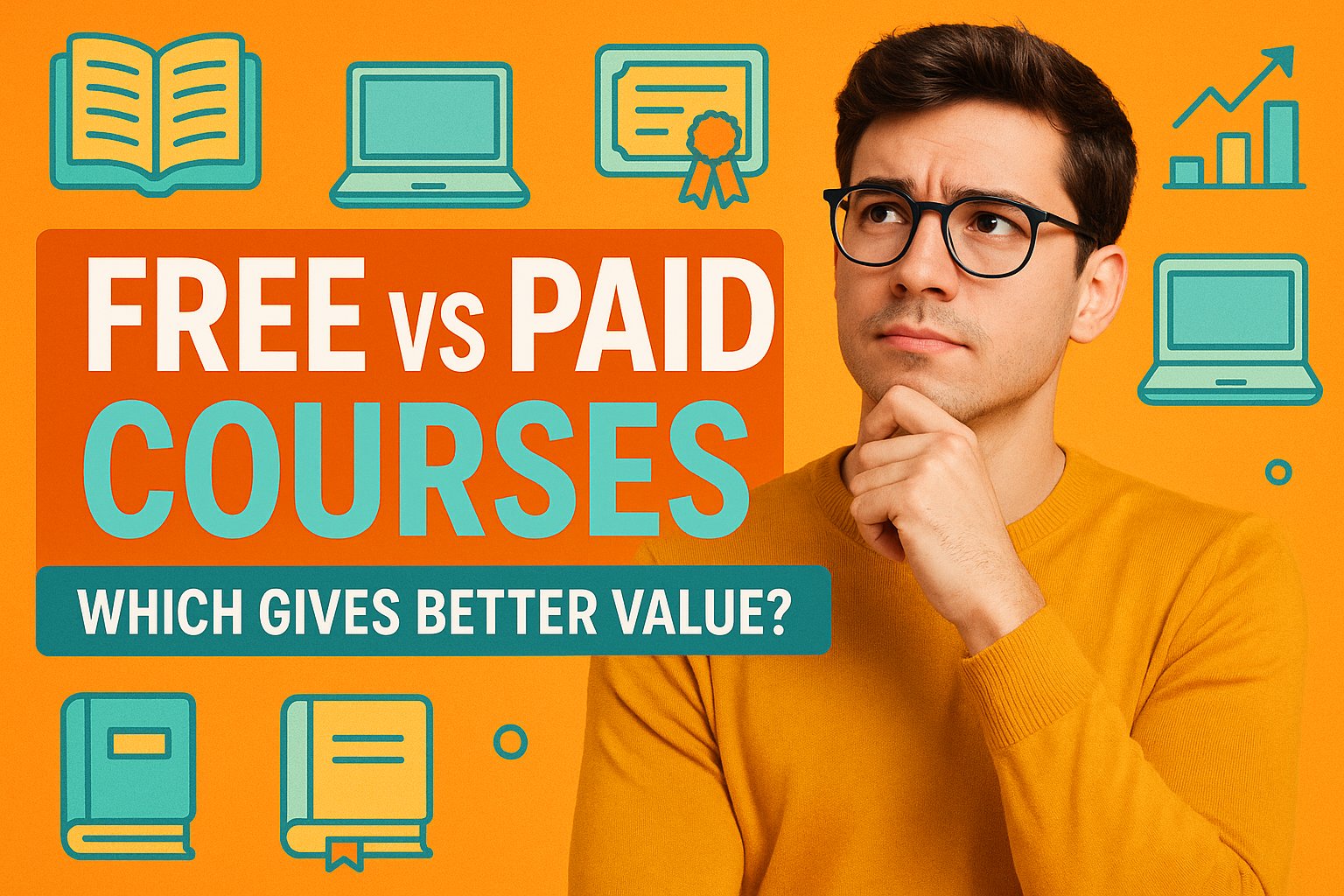
The big question is: Are paid courses really worth it, or can free courses give you the same value?
This guide will help you compare free vs paid courses and make the right choice for your learning goals.
2. Advantages of Free Courses
1. Zero Cost
- You don’t spend a single dollar, making it ideal for beginners or hobby learners.
2. Flexibility
- Learn at your own pace without worrying about deadlines or fees.
3. Access to Many Topics
- Free courses often cover basics in coding, marketing, design, and more.
4. Good for Exploration
- Helps you explore new fields before committing to a paid course.
Popular Platforms for Free Courses
- YouTube tutorials
- Coursera free versions
- edX audit courses
- FreeCodeCamp
3. Limitations of Free Courses
- Limited Depth: Many free courses only scratch the surface.
- No Certification or Credibility: Employers may not recognize a free course certificate.
- Limited Support: Fewer Q&A options or instructor help.
- Fewer Practical Assignments: Limited hands-on projects.
4. Advantages of Paid Courses
1. Structured Learning
- Paid courses usually follow a clear roadmap from beginner to advanced levels.
2. Certificates and Credibility
- Certificates from platforms like Coursera, Udemy, and LinkedIn Learning are recognized globally.
3. Access to Premium Resources
- Projects, assignments, templates, and community support enhance learning.
4. Instructor Support
- Get answers from experienced instructors or mentors.
5. Higher Success Rates
- Paid courses often motivate learners to complete the program.
5. Limitations of Paid Courses
- Cost: Can range from $10 to $500+, depending on the platform.
- Not Always Worth the Price: Some paid courses have low-quality content; research before buying.
6. How to Decide: Free or Paid?
1. Define Your Goal
- Learning a hobby? Free courses are enough.
- Career advancement? Paid courses may be worth it.
2. Evaluate Course Content
- Check if free content covers what you need.
- Paid courses are better for in-depth knowledge.
3. Check Instructor Credibility
- Free courses may be made by anyone. Paid courses often feature verified experts.
4. Look for Reviews
- Student testimonials help determine course quality.
5. Try a Hybrid Approach
- Start with free resources.
- Upgrade to a paid course if you need depth, certificates, or mentorship.
7. Examples
- Free: FreeCodeCamp for coding basics, HubSpot Academy for marketing fundamentals.
- Paid: Coursera Google Data Analytics Professional Certificate, Udemy AI & Machine Learning courses.
8. Final Thoughts
Both free and paid courses have their place. Free courses are great for exploration and basic skills, while paid courses are best for career advancement, certifications, and structured learning.
The key is to match the course type with your learning goal, budget, and desired outcome.
Invest wisely, and your skills — and career — will thank you.
