

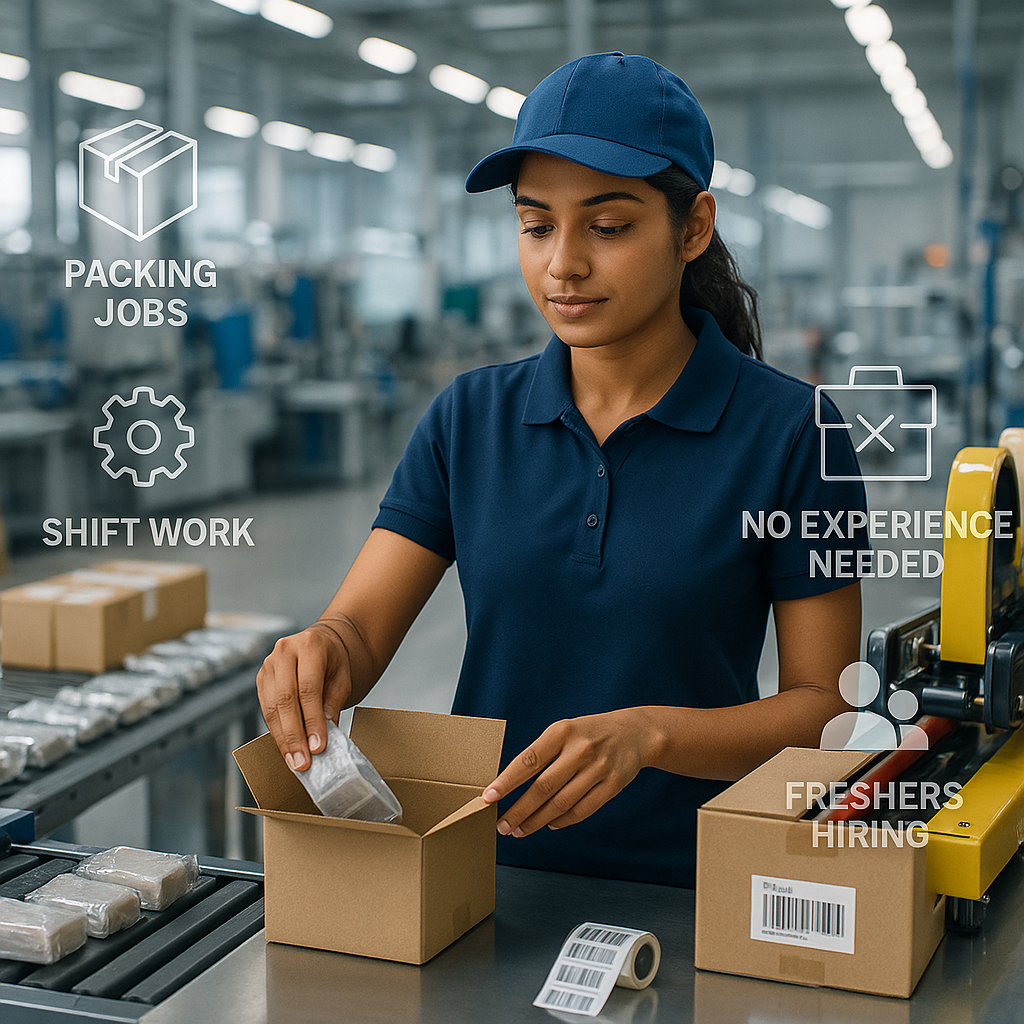
Factory packing jobs are among the most reliable and high-demand employment options for freshers and candidates with basic education. With the rapid growth of manufacturing, FMCG, pharmaceuticals, electronics, textiles, and food production industries, the need for packing workers has increased significantly. These roles focus on preparing finished products for shipment, checking quality, and ensuring safe, damage-free packaging before items reach customers. Because the tasks are simple and easy to learn, even 8th pass, 10th pass, and 12th pass candidates can secure factory packing jobs without previous experience.
What Does a Factory Packing Worker Do?
The main responsibility of a packing worker is to handle the final stage of production. This includes:
- Sorting products
- Checking items for defects
- Cleaning products if required
- Packing products into cartons, boxes, or pouches
- Sealing packets properly
- Counting and weighing items
- Labeling boxes with barcodes or batch numbers
In industries like food processing or pharmaceuticals, hygiene and safety protocols must be followed strictly. Employers provide training for these requirements.
Work Environment & Shift Timings
Factory packing jobs usually operate in shifts, giving workers the flexibility to choose:
- Morning shift
- Evening shift
- Night shift
This makes packing jobs ideal for students, part-time workers, and those needing additional income. Many factories also offer overtime, especially during festival seasons or high-production periods.
Industries with year-round packing demand include:
- FMCG brands
- Snack manufacturing
- Garment and textile factories
- Electronics assembly units
This ensures consistent work and stable monthly earnings.
Skills & Requirements
Most packing jobs do not require advanced technical knowledge. Basic fitness helps because some tasks may involve:
- Standing for long durations
- Lifting light boxes
- Using simple machines like sealing and shrink-wrapping tools
Companies provide on-the-job training where workers learn:
- Packing tools and machinery
- Safety procedures
- Defect identification
- Quality standards
- Productivity targets
Within a few days, freshers become familiar with the workflow.
Career Growth Opportunities
Factory packing jobs offer strong growth potential. Many workers start as basic packers and later move into:
- Line supervisor
- Quality checker
- Machine operator
- Inventory assistant
- Warehouse coordinator
- Shift supervisor
With consistent performance and experience, candidates can grow into higher-paying positions in the manufacturing sector.
Job Availability & Locations
One major advantage is the easy availability of packing jobs. Manufacturing units operate in:
- Industrial areas
- SEZs (Special Economic Zones)
- City outskirts
- Local factories in almost every region
Industries that hire packers regularly include:
- Electronics goods manufacturing
- Plastic products
- Garments and textiles
- Food packaging
- Household goods production
This makes it possible to find a job near your home, reducing travel time and expense.
Beware of Fake Packing Work-From-Home Jobs
Job seekers must stay alert to scams. Real packing jobs always take place inside factories, not at home.
Be cautious of:
- Ads offering “work from home packing jobs”
- Messages asking for a registration fee or security deposit
- Claims of extremely high daily income for simple packing tasks
Genuine factories never ask candidates to pay money to join. Always apply through:
- Official job portals
- Verified recruitment supervisors
- Direct walk-ins in industrial areas
Conclusion
Factory packing jobs are an excellent opportunity for 8th pass, 10th pass, 12th pass, and freshers looking for simple, stable work with immediate joining. The duties are easy to learn, the work environment is structured, and there are great chances for overtime and promotions. With the manufacturing sector growing rapidly, packing jobs will continue to offer reliable employment and long-term career prospects for dedicated workers.
