

The rise of e-commerce in India has transformed the country’s employment landscape more than any other industry in the last decade. What started as a simple online shopping trend has now become one of India’s biggest job-creating sectors, with millions of people working in various roles across logistics, customer service, technology, delivery, marketing, and warehouse operations. In 2025, e-commerce continues to grow rapidly as online shopping becomes a daily habit for people across cities, towns, and villages. With increasing digital adoption, better internet access, and the rise of mobile payments, the e-commerce sector has opened the door to a vast range of career opportunities for students, freshers, skilled workers, and professionals of all backgrounds. This detailed guide explains the scope of e-commerce jobs in India, what roles are available, and how job seekers can build a strong career in this high-growth industry.
E-commerce in India has expanded beyond traditional online shopping platforms. Today it includes online grocery services, food delivery apps, home service platforms, travel portals, digital marketplaces, and specialized subscription-based businesses. The growth of this sector is driven by consumer demand for convenience, speed, and variety. As people increasingly prefer buying products with just a few clicks, companies are constantly expanding their operations to meet expectations. This expansion has created constant demand for positions in warehouse management, product packing, inventory handling, delivery coordination, and customer support. These jobs are available across metro cities, tier two cities, and even smaller towns due to the development of regional fulfillment centers and local delivery hubs.
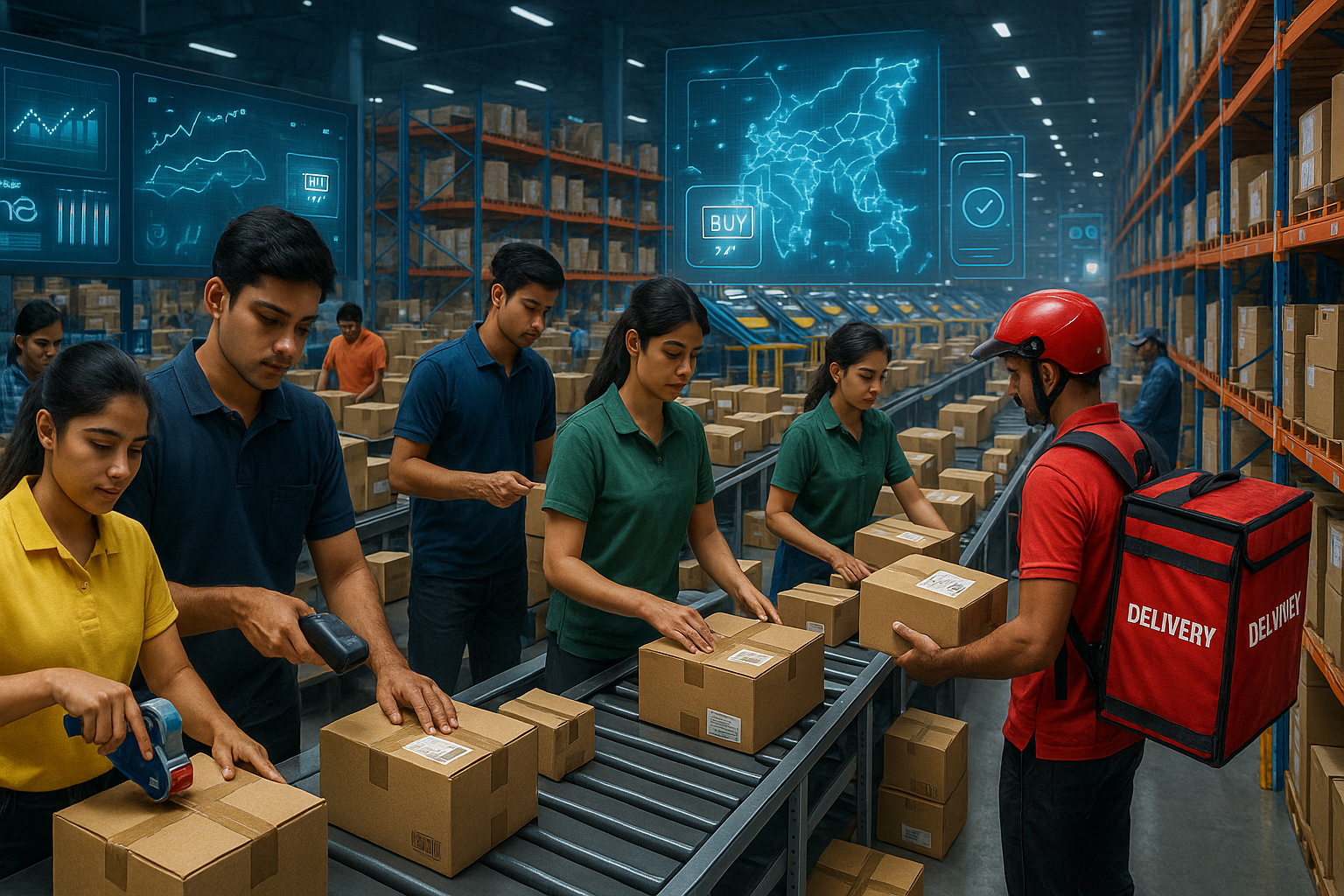
Warehouse jobs are among the most common roles in the e-commerce ecosystem. Every online order begins its journey from a warehouse, where products are stored, organized, packed, and dispatched. Warehouse employees are responsible for receiving goods, checking their quality, arranging them on shelves, and preparing them for delivery. Packing staff ensure that every item is wrapped securely and labelled correctly so that customers receive their orders in perfect condition. Sorting executives arrange parcels based on delivery locations, helping delivery teams complete their routes efficiently. These roles do not require higher education and are ideal for 10th pass, 12th pass, and entry-level candidates. They also offer long-term job stability because the demand for warehouse operations grows consistently with the rise in online shopping.
Another major e-commerce employment category is delivery and logistics. Delivery executives play a crucial role in connecting online platforms to customers. From large courier companies to online grocery apps and food delivery platforms, thousands of delivery professionals work daily to ensure timely and accurate deliveries. As customers increasingly expect faster delivery times, companies are expanding their delivery networks across all regions of the country. Delivery jobs offer flexible working hours, making them suitable for students, part-time workers, and individuals seeking immediate income. Logistics coordinators, on the other hand, work behind the scenes to plan delivery routes, track shipments, manage delays, and ensure smooth movement of goods. This part of the e-commerce chain combines planning with technology and offers strong career growth for individuals who want to work in management or operations.
Customer service is another rapidly growing area in e-commerce. When customers face issues with orders, refunds, tracking information, or product quality, they contact support teams through phone calls, chats, or emails. E-commerce companies employ thousands of customer service executives who handle these queries professionally. These roles require good communication skills, patience, and basic computer knowledge. For 12th pass candidates and fresh graduates, customer service offers a stable entry into the corporate world with opportunities for promotions. Those who perform well can move up to roles such as team leader, trainer, quality analyst, or process supervisor.
Technology and data are the backbone of modern e-commerce, creating many job opportunities for individuals with digital skills. Software developers, app designers, data analysts, web developers, cybersecurity experts, and user experience designers are in high demand. These roles require specialized skills but offer some of the best careers in the digital economy. Even individuals without technical backgrounds can enter these fields through online courses and training programs. The rise of artificial intelligence, machine learning, and automation in e-commerce has further expanded the need for tech-savvy professionals who can manage digital systems and improve customer experience.
Digital marketing has also become a vital part of e-commerce operations. With thousands of brands competing online, companies need skilled marketing professionals to promote products, run advertisements, and attract customers. Content creators, SEO specialists, social media managers, video editors, and advertising experts play important roles in helping companies reach their target audiences. These jobs are perfect for creative individuals who enjoy writing, designing, making videos, or managing social media pages. Digital marketing is one of the most flexible career fields within e-commerce because many companies offer remote job options, freelance projects, and part-time roles for students or young professionals.
Product listing and catalog management form another important part of e-commerce operations. Every product that appears on an online store must be photographed, described, categorized, and uploaded with accurate information. Catalog executives are responsible for writing product descriptions, updating prices, checking inventory, and ensuring that listings appear correctly on the website or app. This job requires a good command of English, attention to detail, and the ability to work with computers. Candidates with strong writing or editing skills often find these roles interesting and rewarding because they involve both creativity and technical accuracy.
As e-commerce businesses scale, companies hire managers and supervisors to handle different departments. Operations managers oversee warehouse activities, delivery coordination, and vendor communication. Human resource managers recruit staff, conduct training, and handle payroll. Finance executives manage payments, invoices, and commercial transactions. Vendor managers communicate with sellers to maintain good relationships and ensure timely product availability. These roles are usually given to candidates with experience, but motivated 12th pass or graduate-level employees can also rise to these positions through promotions and consistent performance.
E-commerce has also made a strong impact on small businesses and self-employed individuals. Many people who previously relied on traditional retail have shifted to online selling through marketplaces. This has created opportunities for individuals to become online sellers, resellers, or small-scale entrepreneurs. Social commerce, where individuals sell products through platforms like social media, has gained massive popularity and has become a full-time profession for many. The e-commerce ecosystem not only provides jobs but also empowers individuals to start their own ventures with minimal investment.
The future of e-commerce jobs in India looks extremely promising. As digital payments expand, logistics networks strengthen, and consumer confidence increases, the demand for skilled workers will continue to rise. Emerging sectors such as online pharmacy, virtual shopping, hyperlocal delivery, and subscription services will create new job roles that did not exist a few years ago. Automation will make certain tasks faster, but human involvement will continue to be essential for quality control, customer engagement, and decision-making roles. This makes the e-commerce industry one of the most dynamic and secure career paths for young job seekers.
Preparing for a career in e-commerce is easier than ever. Candidates need basic communication skills, computer literacy, and a willingness to learn. Developing additional skills such as digital marketing, data analysis, graphic design, and customer handling can significantly improve job prospects. Online courses, internships, and part-time work experience are excellent ways to build confidence and industry knowledge. Employers in the e-commerce sector value dedication, adaptability, and problem-solving ability more than formal degrees, making it an ideal field for students and freshers.
In conclusion, e-commerce jobs in India offer a wide range of opportunities for candidates from all educational backgrounds. Whether someone is a 10th pass student, a 12th pass job seeker, or a graduate looking for a promising industry, the e-commerce sector provides stable employment, skill development, and long-term growth potential. The industry is expanding every year, offering endless possibilities in warehouse management, delivery services, customer support, marketing, technology, and business operations. With the right skills and a proactive approach, anyone can build a successful career in the rapidly growing world of e-commerce. The future belongs to digital businesses, and the individuals who enter this sector today will be the leaders of tomorrow.
