
1. Introduction
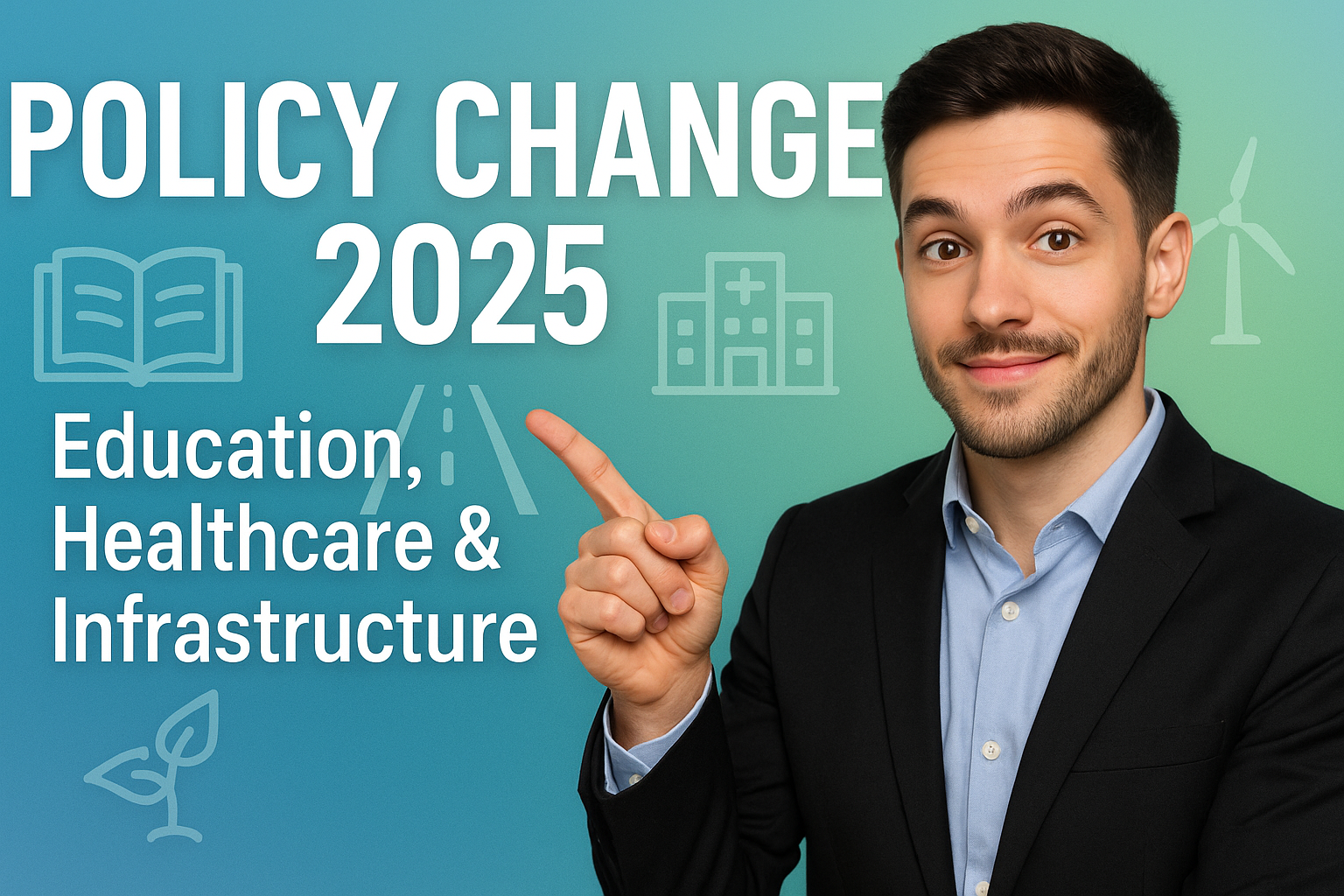
In 2025, several policy changes in education, healthcare, and infrastructure aim to improve citizens’ quality of life and boost national development. Understanding these changes helps individuals, businesses, and communities adapt, benefit, and plan for the future.
This guide highlights the most important policy updates and their impact on daily life, education, health services, and public infrastructure.
2. Education Policy Changes
1. Expansion of Digital Learning Platforms
- Change: Government and private sectors are promoting online education tools, virtual classrooms, and e-learning resources.
- Impact: Students can access quality education remotely, reducing the urban-rural education gap.
2. Revised Curriculum and Skill-Based Learning
- Change: Emphasis on practical skills, coding, critical thinking, and vocational training.
- Impact: Prepares students for modern workplaces and future careers.
3. Increased Scholarships and Financial Aid
- Change: More scholarships for underprivileged and meritorious students.
- Impact: Greater access to higher education and reduced dropout rates.
4. Teacher Training & Capacity Building
- Change: Programs to upskill teachers in digital tools, modern pedagogy, and inclusive education.
- Impact: Improves teaching quality and student learning outcomes.
3. Healthcare Policy Changes
1. Expansion of Telemedicine Services
- Change: Government-backed teleconsultations and digital health services.
- Impact: Better access to healthcare in remote areas, reduced hospital visits.
2. Health Insurance Reforms
- Change: Wider coverage, simplified claims, and lower premiums.
- Impact: More citizens can afford essential health services.
3. Emphasis on Preventive Healthcare
- Change: Programs promoting regular health check-ups, vaccinations, and wellness campaigns.
- Impact: Early detection and reduced burden on hospitals.
4. Digital Health Records & Data Management
- Change: Implementation of e-health records for patients nationwide.
- Impact: Efficient treatment, easy data access, and better tracking of health trends.
4. Infrastructure Policy Changes
1. Smart Cities & Urban Development
- Change: Investment in smart infrastructure, digital services, and sustainable urban planning.
- Impact: Improved public transport, traffic management, and citizen services.
2. Rural Connectivity & Roads
- Change: Expansion of highways, rural roads, and internet connectivity through BharatNet.
- Impact: Enhances trade, education, and healthcare access in rural areas.
3. Green & Renewable Energy Projects
- Change: Policies supporting solar, wind, and clean energy infrastructure.
- Impact: Reduced carbon footprint, sustainable development, and new job opportunities.
4. Affordable Housing & Urban Amenities
- Change: Subsidies, new schemes, and housing projects for low- and middle-income families.
- Impact: Improved living conditions and better urban infrastructure.
5. How These Policies Affect Citizens
- Education: Better learning resources, skill development, and career readiness.
- Healthcare: Accessible, affordable, and quality medical services.
- Infrastructure: Safer, smarter cities, improved connectivity, and sustainable living.
- Opportunities: New jobs, scholarships, and investment possibilities.
6. Tips to Benefit from These Policy Changes
- Stay updated via official government portals and news sources.
- Take advantage of scholarships, online courses, and training programs.
- Utilize digital health and telemedicine services for family wellness.
- Engage in government schemes for housing, clean energy, and connectivity.
- Participate in community programs that benefit from new infrastructure initiatives.
7. Conclusion
Policy changes in education, healthcare, and infrastructure in 2025 are designed to empower citizens, bridge gaps, and promote sustainable growth. By staying informed and proactive, you can leverage these initiatives to improve your quality of life and seize new opportunities.
Meta Description:
“Learn about key policy changes in education, healthcare, and infrastructure for 2025. Discover how these updates impact daily life, career opportunities, and access to services.”
